 |
Equal Pay is not just a principle. It is a legal requirement. Are you ready? Your Guide to understanding and taking action on Equal Pay and the Gender Pay Gap in line with the new Pay Transparency Directive. Do not just comply, lead the way! |
The EU Pay Transparency Directive (PTD) represents a major turning point in European labour and equality policy. By 7 June 2026, all Member States must have new laws in place to ensure pay transparency and tackle unjustified pay gaps. This is not just about ticking legal boxes. It is about building fairer pay systems and workplaces at every level.
Despite the growing presence of women in the workforce, disparities in remuneration between men and women still persist, making the Gender Pay Gap (GPG) one of the most significant aspects of modern debates on achieving Equal Pay. GPG levels are not just abstract data; they have concrete, lasting consequences. The GPG contributes to higher risks of poverty, increased vulnerability, financial dependence on others or social welfare, and significantly lower retirement entitlements, ultimately leading to the gender pension gap. If we fail to act now, today’s pay gap will become tomorrow’s poverty.
This interactive tool offers a visual representation of good practices for addressing gender-based pay inequalities through an engaging, map-based format. Designed for policymakers, institutions, organisations, professionals, and individuals with an interest in gender pay equality, the tool highlights how to move from understanding the GPG to actively addressing it. Whether you are drafting legislation, updating internal policies, engaging your colleagues, raising awareness or simply seeking to better understand the issues this map provides evidence-based direction. Users are invited to click through the different elements of the map to uncover key insights, trends, valuable resources, national laws from the consortium countries, and tailored actions designed to address pay inequities based on gender.
What is included in the Map?
- Path Towards Equal Pay: This includes an overview of the new EU PTD, existing national transparency measures, contributing factors to the gender pay gap, and insights from qualitative research across the consortium countries and in three key sectors: finance, healthcare,and sustainability/innovation.
- Good Practices Map: A visual collection of real-world actions to adopt, and practices to avoid, in addressing unequal pay and the gender pay gap, drawn from cross-sector and cross-country experiences.
- What is different about this tool?
- It translates law and research into action.
- It visualises the GPG through comparative Equal Pay Days across the consortium countries, insights on the key contributing factors, all within the context of the already existing national transparency initiatives.
- It links directly to the requirements and impact of the PTD, helping the relevant stakeholders to prepare for 2026 and beyond.
- It includes a practical ‘Dos & Don’ts map’ providing clear, actionable guidance to help users understand and implement effective GPG measures.
The insights presented are grounded in comprehensive study, combining desk-based research – including literature reviews, case law, official reports and publications –, supported by qualitative data collected through interviews with stakeholders from the RE-WIRING consortium countries and in three key sectors.
In line with the RE-WIRING Transformative Equality Approach (TEA), the research goal is to go beyond simply addressing the root causes of gender inequalities, actively challenging marginalisation, reshaping gender norms and stereotypes, and confronting cultural values and power imbalances that perpetuate inequities. In other words, the aim is not ‘fixing‘ women per se or expect them to adapt to rooted unequal systems, but to drive transformative change that challenges those systems. Such change must involve everyone, at all levels. Consequently, the research findings, good practices examples, and the legal rules on pay transparency can be easily tailored and adapted to other sectors and countries. Whether at the beginning stages or refining an existing strategy, the map is designed to support effective and confident actions on one of the most urgent equality challenges of our time.
For a more detailed explanation of the research background and context, please refer to the appendix accompanying the map.
For the Best Viewing Experience
To access the map’s full functionality, we recommend viewing it in full-screen mode.
Pro tip: Click the expand icon in the bottom-right corner to enlarge the presentation. This will allow you to navigate across pages, hover over interactive elements, and access the complete content.
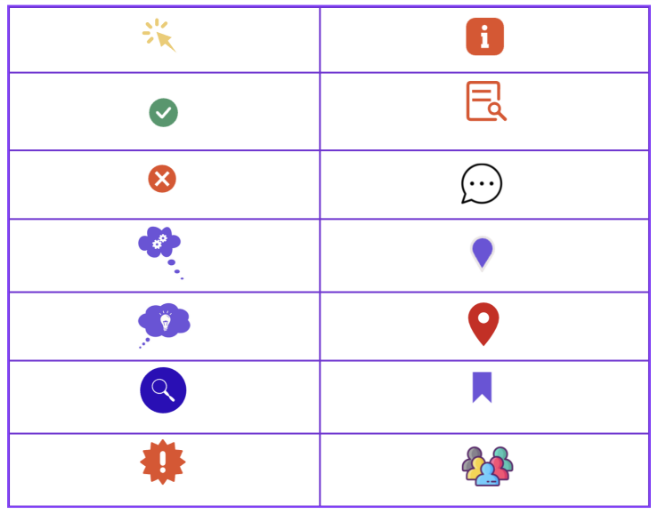
Navigation Symbols: Look out for the following symbols as you explore the map. Hovering over them will help you navigate the content, highlight important details, and make your journey smoother.